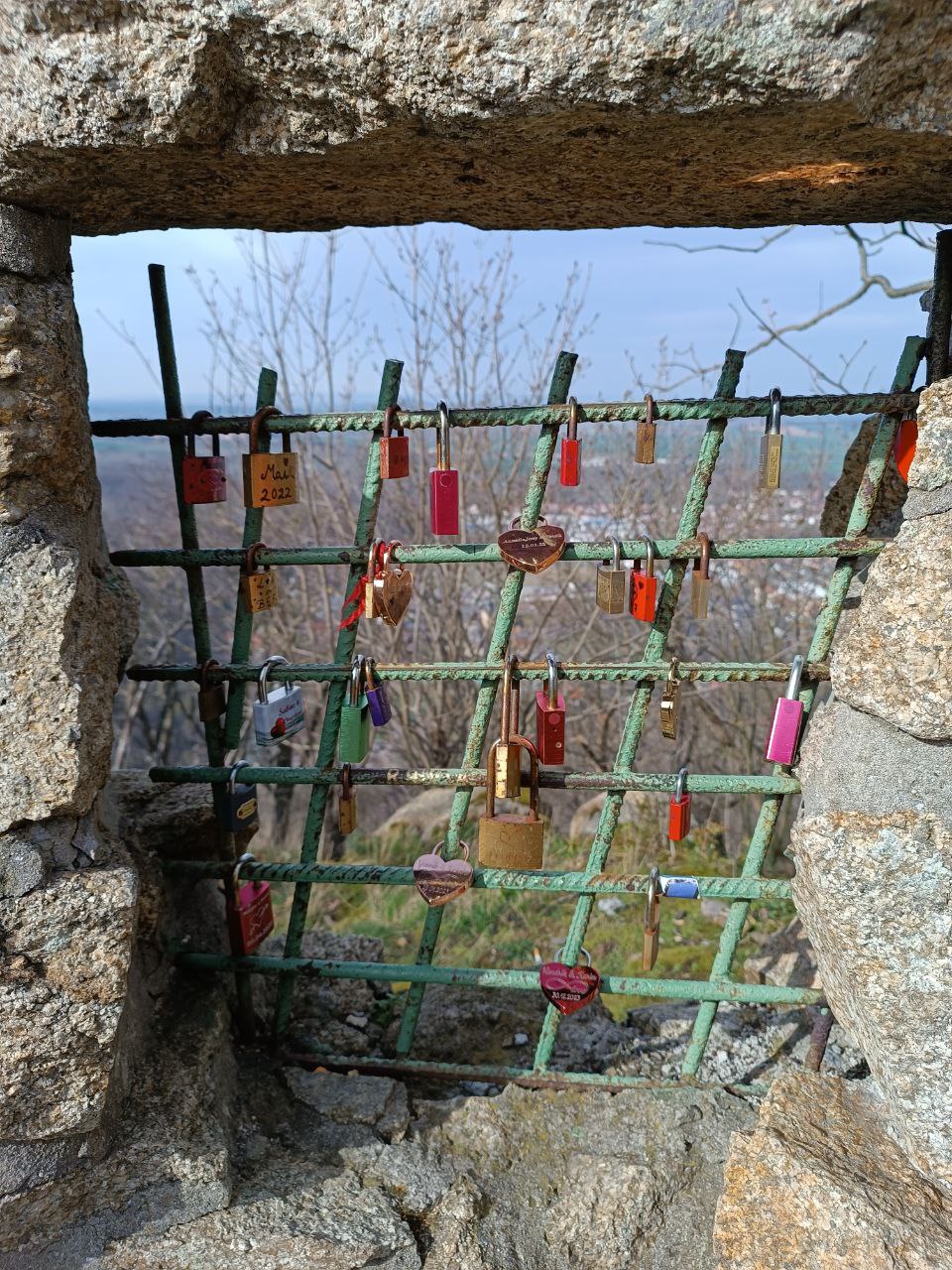
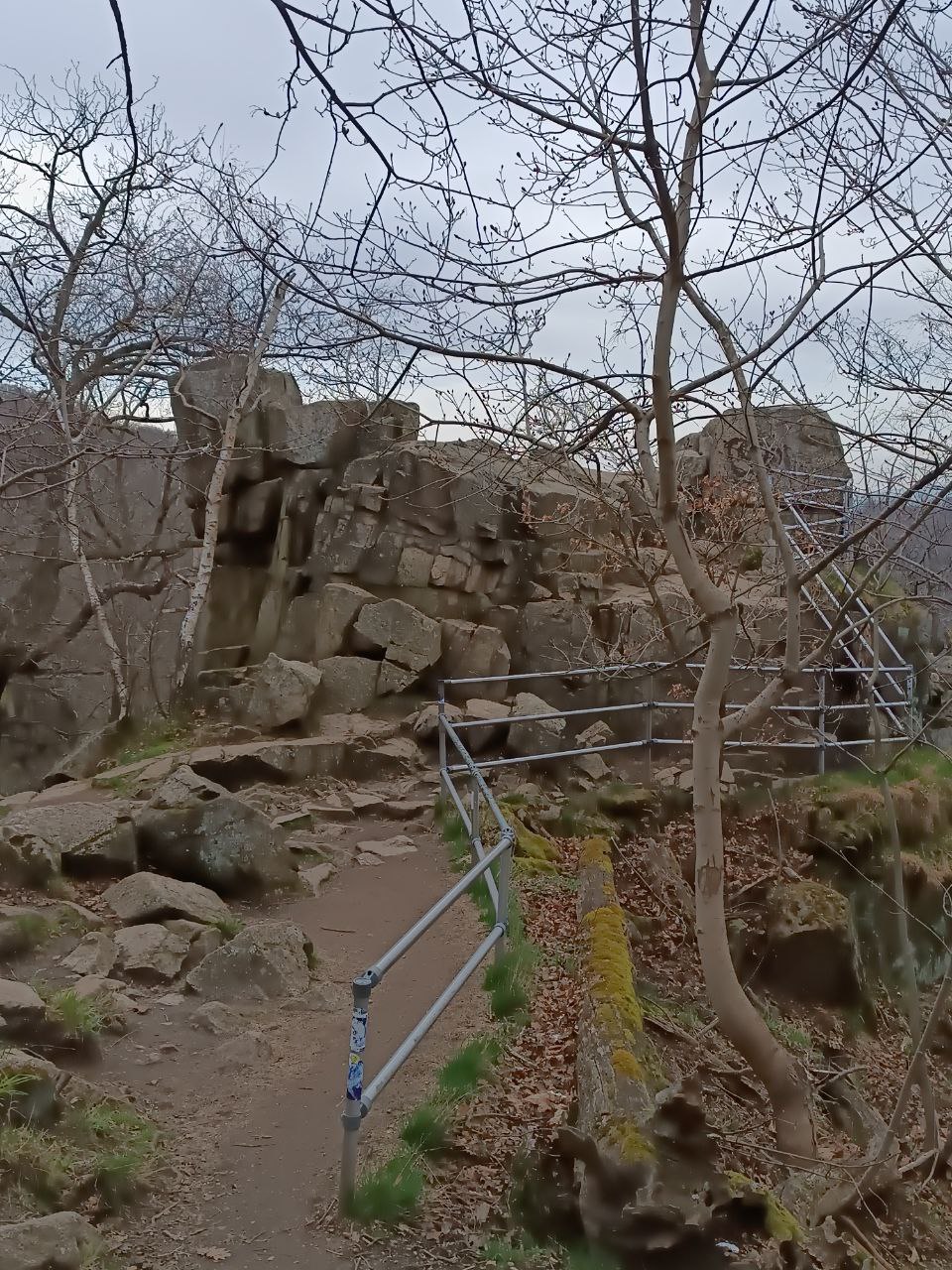
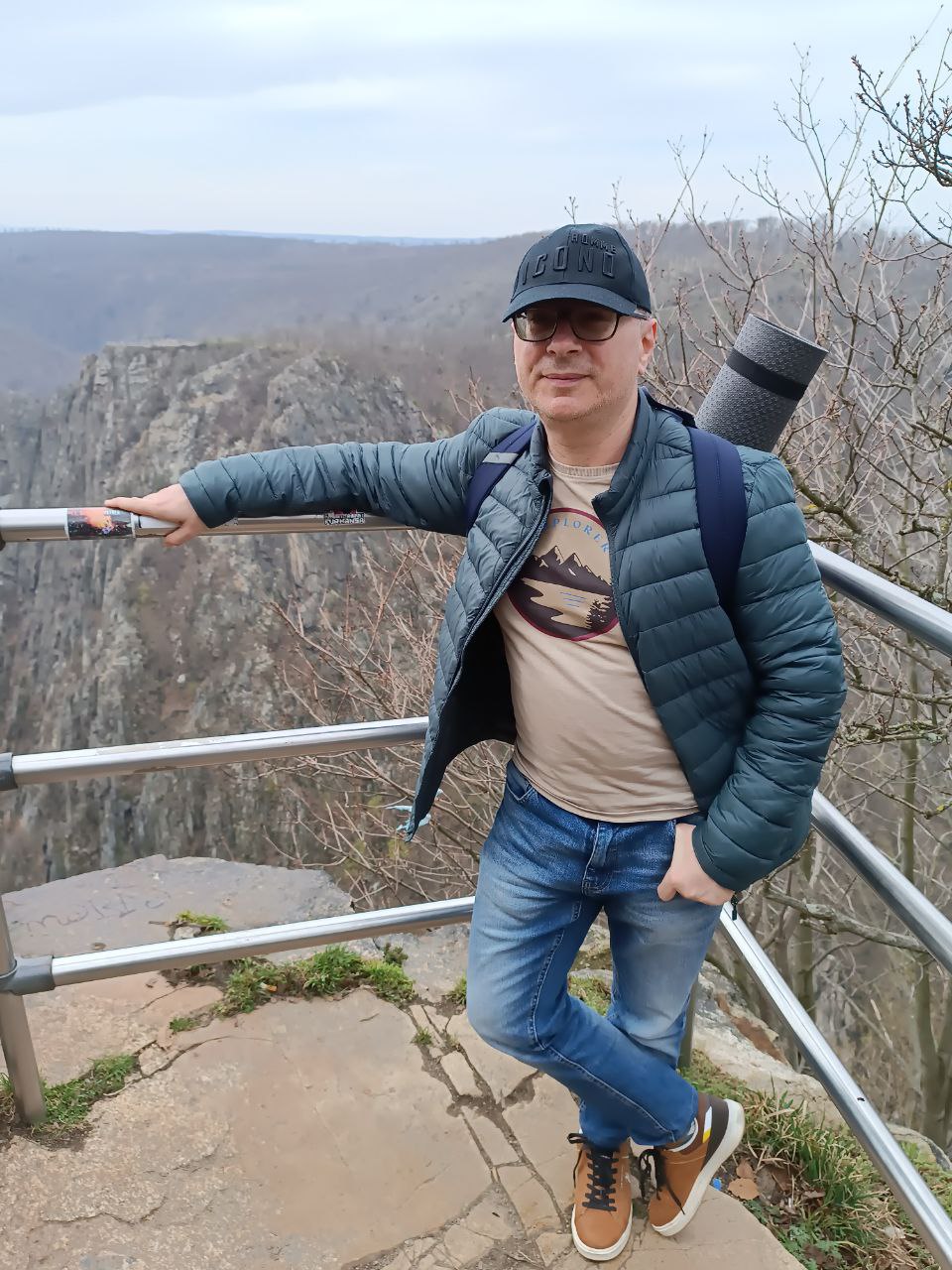
Last week, my wife and I took a car trip to the small town of Thale, which is located in the Harz Mountains. This is our second trip there. During the first trip in October last year, we visited the local “Grand Canyon” called Bodetal with the help of a cable car. This time we had the goal of exploring a mystical place called the Witches’ Dancing Floor (Hexentanzplatz). For this, we used another, more modern cable car line. We really liked the observation decks with great views of the mountains and the town of Tale, the modern cable car cabin, as well as the unusually warm weather for the end of March.
Witches’ Dance Floor is an ancient Saxon cult site where pagan events and celebrations were held, in particular on the night of May 1. Now a zone for family recreation has been created here: a wildlife park, several interesting attractions, thematic sculptural groups, a theater, a museum, restaurants and souvenir shops.
Overall impression: mediocre
Usually, after arriving at a place, we first go for coffee, and then, when the mood improves significantly after coffee, we visit the places we planned. Last time we enjoyed the coffee shop Eis Alm Thale. There is free parking and good coffee at affordable prices. But, unfortunately, it is closed every Wednesday and Thursday. In general, in Germany, the vast majority of related tourist services, such as restaurants, museums, souvenir shops, wineries, tourist information centers, etc., have very strange opening hours. They can only work half days, have the odd weekend, as in the case of the Eis Alm Thale cafe, or even work exclusively every Saturday and every Sunday. Many establishments are generally closed during the “low season”. Last year in July, we were surprised by the work schedule of one winery – May, June, August and September. And in July we had to look for another one elsewhere.
So, instead of Eis Alm Thale, we visited Peter’s Sports-Restaurant & Biergarten. There is also a free parking lot there, but the prices for coffee are higher and its quality is lower. I want to say about another huge drawback of the German service – the impossibility of paying with a banking card. For example, in Peter’s restaurant, this, in my opinion, mandatory service is provided only if the total amount of the bill exceeds 10 euros. Parking machines, street trade and museums, wineries accept payment exclusively in cash. Those who read me in English or Ukrainian understand that this is very inconvenient!
When we got to the Witches’ Dance Floor, we saw that it was in complete disarray due to the renovation of the area. Tourists with a health risk walk past huge trucks and excavators that even go onto footpaths. Many interesting sites, for example, the House of Witches (Hexenhaus) and Walpurgis Hall (Walpurgishalle) are closed.
The wife liked the witch doll in the souvenir shop. We wanted to first see what dolls are sold in other shops located a little further. When we returned half an hour later, the shop was already closed, although it was only 14:20 on the clock. By the way, we saw a notice on the door of the Berghotel Hexentanzplatz restaurant that there is no toilet here. The toilet was 150 meters from the restaurant, but its services already cost 1 euro. A certain lifehack in this regard is the availability of a free toilet at the Harzbob Thale attraction.
Summary
As a conclusion, I would like to say that you can get used to everything. At first, as for car trips through Saxony-Anhalt, we experienced a lot of inconvenience. Now we carry cash with us, plan ahead for a parking spot, double or triple check the opening hours of the places we want to visit.
By the way, in my previous post about tourism in Saxony-Anhalt, I wrote that there are many shortcomings in this field. For now, there is good news. This year the marketing company IMG Saxony-Anhalt has developed new interesting group tour packages for tourists from several countries. Even the Hello Saxony-Anhalt! website was developed. Unfortunately, for known reasons, these packages are not intended for tourists from Ukraine. However, 1.2 million Ukrainian refugees currently live in Germany alone. And in the neighboring Czech Republic and Poland – the same number. Let’s work on it!