Environmental conservation is a growing concern in the tourism industry, both among tourism professionals and travelers. More and more tourists are looking to limit the impact of their holidays on the environment.
Sustainable tourism is based on three pillars:
- make optimal use of environmental resources;
- respect the socio-cultural identity of host communities;
- provide viable long-term economic activity.
But did you know that regenerative tourism goes one step further and has a positive impact on your holiday destination? This new type of stay aims to “restore” damaged ecosystems.
A highly polluting sector of the economy
Despite holidaymakers’ desire for greener holidays, the tourism sector remains one of the most polluting due to transport and long-haul flights. As housing goes green, transportation alone accounts for 77% of greenhouse gas emissions in the sector.
More than any other field, tourism is a perfect illustration of the tension between work and ecology, personal pleasure and civic effort, polluting activities and the necessary ecological transition. To limit the inconvenience to local residents and the deterioration of ecosystems, more and more cities and countries are taking proactive measures against mass tourism: introducing taxes and bans, enforcing dimensions and requiring advance booking to access certain popular places.
To combine leisure and serious development, new forms of tourism have emerged, such as regenerative tourism. This term was coined in 2021 to promote a new idea of travel and to address the problem of environmental pollution and overtourism at its root.
Unlike eco-friendly travel, which encourages us to leave no trace behind, regenerative tourism encourages us to try to make the place we visit even better than we found it. This way, you can combine a vacation with the opportunity to help the environment.
This is the kind of travel that not only means you try to visit new places in a more eco-friendly way (like carrying a reusable water bottle or bringing your own food on the plane), but you can also contribute to making them better. Through volunteer programs or hotels that offer their guests the opportunity to help the planet. Like the Verdura Resort in Sicily, which offers the opportunity to plant a tree and monitor its life cycle.

Positive tourism
The concept of “regenerative tourism” was born from the idea that “sustainable” tourism is not enough and that the sector must take an extra step to secure its future. While the tourism industry has so far experienced uncontrolled development, voices are being raised to challenge the established model and offer different types of tourism experiences.
Regenerative tourism will change the way we think about holidays and travel. The idea is to leave a holiday destination in exemplary form, rather than just visiting it and leaving it as is. New Zealand is the first country willing to develop regenerative tourism on its territory.
During such a stay, the visitor does not simply cross the destination, trying not to damage anything along the way. He is invited to lend a helping hand and participate in the restoration of ecosystems. The stated goal is to allow visitors to have a positive impact on their route in various areas, such as biodiversity and the local economy.
From now on, travelers do not only think about how not to cause possible damage during their trip, but how to use their stay to improve the situation in this area.
According to Booking’s 2021 Sustainable Travel Report, nearly 2/3 of travelers believe the pandemic has impacted their desire to travel more sustainably in the future. After all, we now understand, firstly, how much travel means to us, and secondly, what a negative effect we leave behind. Especially given the new reality, where disposable masks, gloves and sanitizers are widely used. That’s why we need to look to the future of regenerative travel. Of course, this is not a replacement for sustainable tourism. But it is another opportunity for us to help our planet restore its strength.
New model
The recent concept of “regenerative” tourism is not a fixed model that duplicates the same actions. This new trend will change the way we see travel and encourage professionals and tourists to participate in local activities while respecting the uniqueness of each territory. With this new form of stay, close to solidarity tourism or participatory tourism, you will contribute at a social, economic or environmental level.
Regenerative tourism is still in its infancy. But it is a trend that should be followed in the coming years. Even if it does not become widespread overnight, it offers an optimistic and hopeful vision in which tourism becomes a tool for restoring damaged natural resources and creating healthy and prosperous communities.
How to start?
It seems like it would be easier to check into an eco-friendly hotel. But regenerative tourism is not as difficult as it seems. For example, you can choose a country that has volunteer programs.
Hawaii launched a campaign called “Malama Hawai’i” as part of its COVID-19 recovery plan. The campaign aims to offer travelers a deeper understanding of the islands through cultural immersion and the opportunity to give back to the land (cleaning up trash on the beach, harvesting crops).
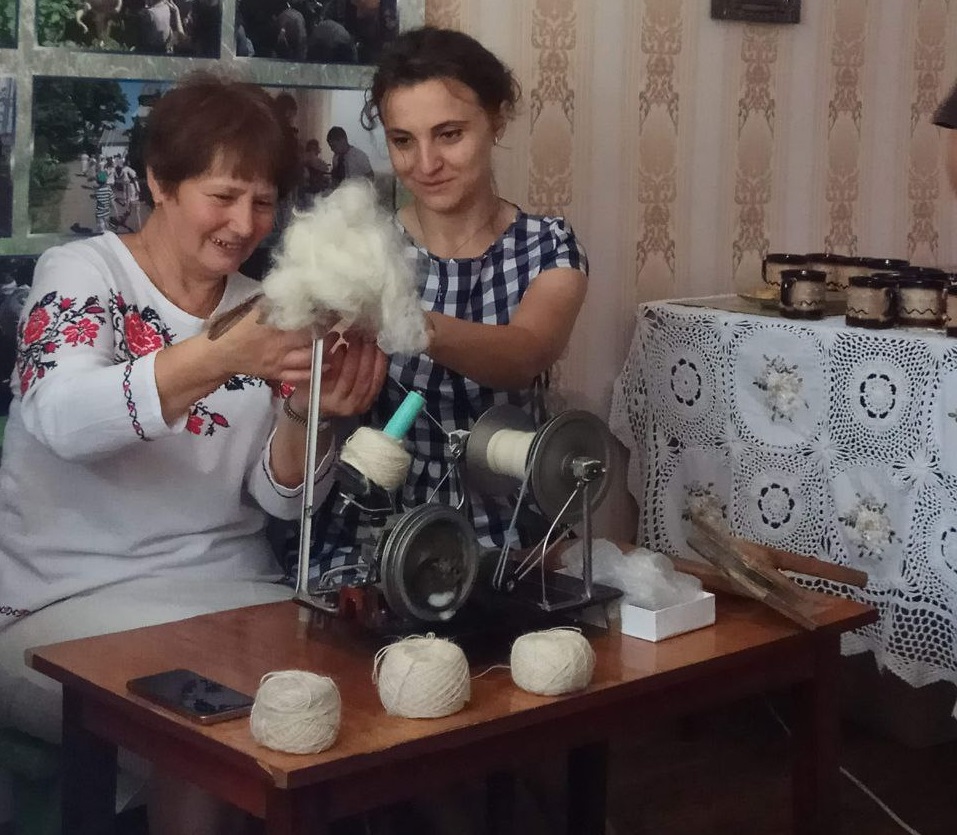
You can also support the local community. For example, attend a master class on making local souvenirs, and then spend a few days making them in the same workshop.
Another option for regenerative tourism is to choose hotels that support this movement. Such resorts are available all over the world. And each offers its own way of helping. From harvesting crops to attending master classes from locals, which helps provide jobs for the locals. So never be afraid to ask if the places you are going to have activities that help restore or protect the ecosystem. And also bring some other benefit. In this case, initiative is not punishable. After all, we are all responsible for what we have done to planet Earth.
Regenerative tourism in Ukraine
Despite the fact that regenerative tourism is a new trend in the industry, Ukraine already has experience in its development. The pioneers here were the Black Sea Sustainable Rural Tourism Program (BSST). The pilot project was launched in Kobleve community of Mykolaiv Oblast. Unfortunately, after the full-scale Russian invasion of Ukraine, this project was temporarily closed.
(c) Oleksandr Fainin